
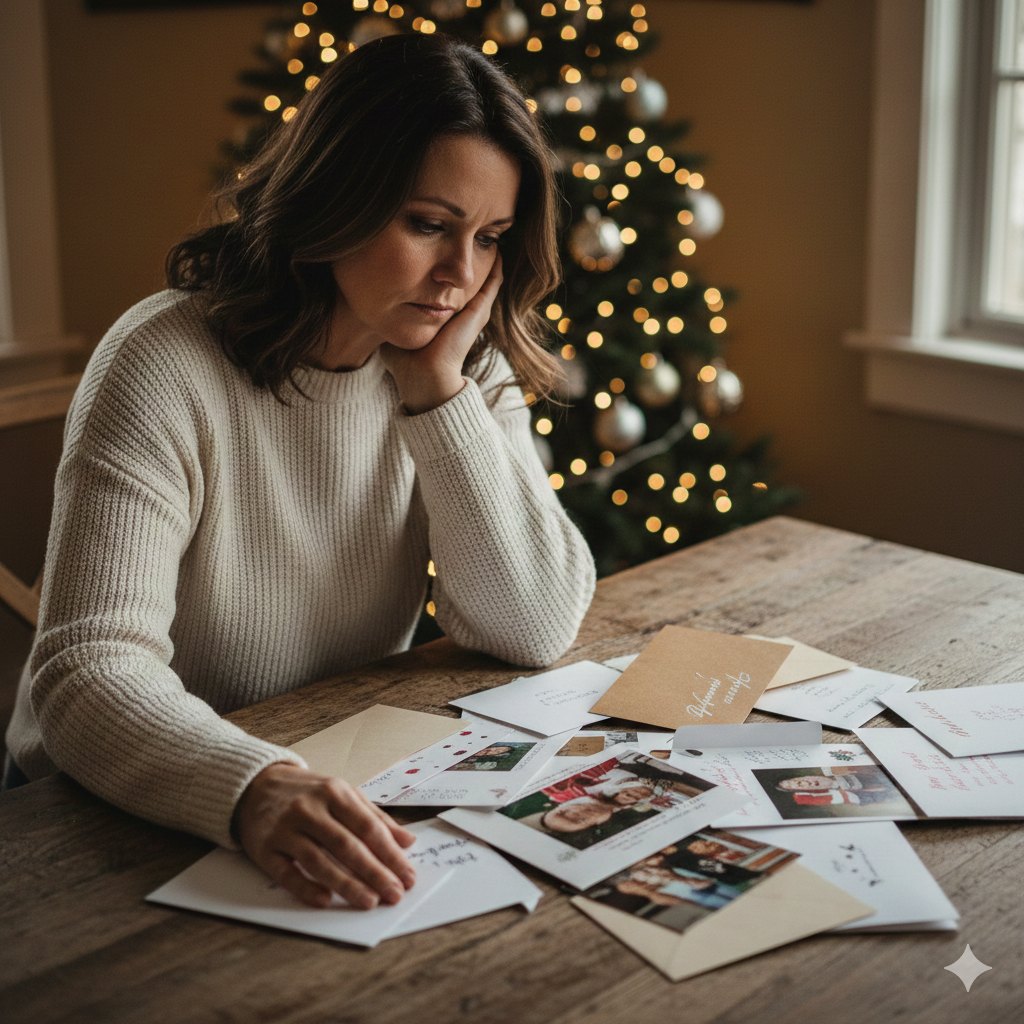
The stack of Christmas cards sits unopened on your counter. Or you’ve been staring at blank cards for days, unable to write a word. Perhaps you’ve received cheerful family photos that sharply remind you of what you’ve lost.
If Christmas cards after suicide loss feel impossible right now, you’re not alone. This simple tradition becomes unexpectedly complex when you’re grieving. Whether you’re struggling to send cards, hurting from the ones you receive, or supporting someone in their grief, this guide offers compassionate strategies for navigating it all.
Remember: There is no “right way” to handle Christmas cards after losing someone to suicide. Whatever you decide is okay.
Table of Contents
If You’re Grieving:
- Why Sending Cards Feels So Hard
- When Receiving Cards Hurts
- Easier Alternatives
- You Don’t Owe Anyone Cheer
If You’re Supporting Someone:
For Everyone:
Why Sending Christmas Cards Feels So Hard
After suicide loss, Christmas cards trigger questions that never mattered before.
The Signature Question
Do you include the person you lost? “The Smith Family” feels incomplete, yet including them feels dishonest. There’s no perfect answer. Some families add “remembering [name].” Others place angel wings or a halo next to their person’s name. Some put the name inside a heart. Others quietly adjust the names listed.
Choose whatever feels right to you. You can change your approach each year.
The Photo Dilemma
If you usually send photo cards, new questions emerge: Use the last photo that includes the person you lost? Take a new one with an obvious absence? Skip photos entirely?
Some families include a small separate photo of the person they lost. Others create memorial-style cards. Many switch to simple cards without photos.
Key Point: What feels impossible this Christmas might feel different next year. Give yourself permission to change your approach.
The Message Problem
Standard holiday phrases feel hollow. “Wishing you joy” just feels wrong when you feel sad. “Hope your year was blessed” feels like a cruel joke. How do you wish others happiness when yours has been beyond painful?
It’s Like Those Thank You Notes
Remember the thank you notes after the funeral? The ones for condolences, flowers, and meals? Maybe you wrote them. Maybe you didn’t. Maybe you got halfway through and gave up. In our house, we refer to them as the “Thank you for the worst day of my life notes”…
There was no judgment then, and there should be none now. Many survivors simply don’t send Christmas cards the first year or two. Some never return to the tradition. This is perfectly okay.
Sometimes “Faking Normal” Helps
Here’s something surprising: sometimes sending a simple card with “Happy Holidays” and nothing more can provide brief relief. If pretending things are normal for a moment helps you feel less consumed by grief, that’s valid too.
You don’t have to acknowledge your loss in every card.
When Receiving Cards Hurts
Glossy photo cards showing intact families. Holiday letters detailing graduations, promotions, vacations, new babies. Stories of kids getting into college, anniversaries, Thanksgiving gatherings.
These can trigger unexpected emotions.
Envy and Jealousy Are Normal
You might envy their ability to celebrate ordinary milestones. Feel jealous that their family stayed whole. These reactions don’t make you petty or small. They’re completely normal responses to profound loss.
You’re not begrudging their happiness. You’re mourning your stolen future. A part of you and your dreams died when you lost someone to suicide.
Just as navigating Thanksgiving brings complex emotions, Christmas cards activate similar feelings about celebration and connection.
The Loneliness of Others’ Joy
Research from Sue Ryder shows that 34% of bereaved people feel lonelier than ever during Christmas. When everyone else’s cards radiate happiness, your isolation feels even sharper.
The Stress of Loss Makes This Difficult
After suicide loss, concentration becomes impossible. You might read a card three times and still not process it. Writing a personal note requires energy and words you don’t have.
This cognitive fog is normal, particularly in the early weeks after loss. Your brain is processing trauma. There’s little capacity left for crafting holiday messages.
Cards as Reminders
Every card reminds you who won’t be there. Your person won’t see the snow, taste Christmas dinner, hear the music, open gifts, or laugh at family jokes.
The cards also remind you of all future holidays without them. You’ll never send them a card at their own address. You won’t see photos of them with their children around a Christmas tree.
Understanding how grief shows up unexpectedly can help you navigate these painful moments with more self-compassion.
Remember: Often the anticipation of holiday pain is worse than the actual experience. Don’t spend weeks dreading what might be manageable when the moment finally arrives.
Protecting Yourself
If opening cards has become too painful, ask someone else to handle them. A trusted friend can screen your mail, setting aside difficult ones for later. Remember all those people who asked you if there is anything they can do for you?
Or designate a specific time to open cards when you feel relatively stable, rather than opening them throughout the day.
Easier Alternatives to Traditional Cards
If you want to send cards but the traditional approach feels impossible, try these:
Simple Solutions:
- Buy cards with longer printed messages (you only sign your name)
- Use a rubber stamp: “Thinking of you this season”
- Choose blank cards with holiday motifs (write what feels authentic or nothing at all)
- Send cards in January or February instead
- Ask a friend to help address and mail them
- Skip them entirely without guilt
New Traditions:
- Wait until after the holidays to send “thinking of you” notes
- Be honest: “This year has been devastating. We’re doing our best. Thinking of you with love.”
- Send cards only to your closest circle
- Text photos of your person’s favorite ornament instead
- Light a candle and think of people you love
Similar to navigating other holiday challenges, adapting traditions honors both your grief and your person’s memory.
Reconnecting Through Cards
If you do send cards, they can reopen doors to relationships that faded during your grief.
In the early days, you couldn’t respond to everyone who reached out. Good people may have stepped back, not wanting to intrude. They might be waiting for a signal that you’re ready.
Your Christmas card can be that signal:
- “I wasn’t able to respond during the hardest days, but your support meant everything. I’d love to hear from you.”
- “If you’ve been thinking about reaching out, please do. I’m ready for connection again.”
- “I’m slowly finding my way back. Coffee sometime?”
The choice is yours. You don’t have to reconnect with everyone. But if there are people you miss, your card can be the gentle invitation that brings them back.
You Don’t Owe Anyone Holiday Cheer
You don’t owe anyone Christmas cards, cheerful updates, or pretending everything is fine when your world has been destroyed.
Some years you might manage cards. Some years you won’t. Some years you might even enjoy the process. Other years it will feel impossible. All of these responses are valid.
The holidays after suicide loss are about survival, not performance. Your person wouldn’t want you forcing yourself through traditions that cause pain. They’d want you to be gentle with yourself.
Sending Cards to Someone Grieving Suicide Loss
If someone in your life lost someone to suicide and you’re wondering whether to send a Christmas card, here’s what helps.
Why Your Card Matters
Send something. Don’t avoid them because you’re worried about saying the wrong thing. Many bereaved people report that being ignored hurts more than an imperfect message.
Your card tells them they haven’t been forgotten.
Choose the Right Type of Card
Skip the overly cheerful family photo and detailed “our amazing year” newsletter. Consider a simpler card or one with a blank interior.
If you do include a family update, add a handwritten note acknowledging their loss.
What to Write
Mention their person by name. “Thinking of you and remembering [name] this Christmas” means more than generic wishes.
Examples:
- “I know this Christmas will be difficult without [name]. I’m holding you in my heart.”
- “Wishing you moments of peace during this first holiday without [name]. You’re not alone.”
- “There are no right words, but I want you to know I’m here. Thinking of you and [name].”
Most Important: Be genuine and specific, not generic.
Share a Memory or Story
One of the most meaningful things you can include is a specific memory of their person from a better time.
This is especially powerful if it’s a story they might not have heard:
Examples:
- “Last spring, I saw [name] at the coffee shop helping an elderly woman carry groceries. She didn’t know I was watching. That kindness was so typical of her, and I wanted you to know.”
- “I keep thinking about that summer barbecue when [name] told those terrible jokes. He was so happy that day. That’s the memory I hold onto.”
- “Your daughter once gave me advice about [situation] that I still think about. Her wisdom helped me more than she knew.”
Why this matters: These stories remind survivors that their person had a life beyond their final struggle. They existed in moments of joy and connection.
According to Sue Ryder research, 44% of bereaved people found that reflecting on happy memories helped them during the holidays.
Don’t Expect a Card Back
They may not have the capacity to reciprocate. That’s completely fine. Your card is a gift with no strings attached.
Keep sending yours if you want to maintain connection, without expecting anything in return.
Moving Forward Through the Holidays
As this season unfolds, remember: you’re doing the best you can with an impossible situation.
Whether you send cards or don’t, write long notes or just sign your name, include your person with angel wings or choose silence—all of these are valid expressions of your grief and love.
Grief Is Unpredictable
Next year might feel different. Or the year after. You might return to cards, or discover they no longer fit your life. Both paths are okay.
Healing doesn’t mean going back to who you were before. It means finding ways to carry both your grief and your life forward.
You’re Not Alone
Thousands of other suicide loss survivors are walking this same difficult path. You don’t have to face the holidays alone.
- International Survivors of Suicide Loss Day happens the Saturday before Thanksgiving
- Support groups through AFSP connect you with others who understand
- Alliance of Hope offers online community support
- 988 Suicide and Crisis Lifeline provides 24/7 crisis support
This season will pass. When it does, you’ll have survived another set of firsts or seconds or tenths. That’s courage, whether you sent a single card or not.
Frequently Asked Questions
Should I send Christmas cards the first year after suicide loss?
There’s no “should.” Many survivors skip cards entirely the first year, and this is completely acceptable. Focus on your healing. Your emotional wellbeing matters more than social obligations.
How do I address cards when someone died by suicide?
Many families add “remembering [name]” to the signature, place angel wings next to the name, or put the name inside a heart. Choose whatever feels right. There’s no wrong answer. You can change your approach each year.
What do I write when I’m grieving?
Keep it simple: “This year has been incredibly difficult. Thinking of you with love.” Or just sign your name. Authenticity matters more than cheerfulness.
Is it okay not to send cards?
Absolutely. Many people never return to this tradition after loss. Friends who truly care will understand.
How do I handle receiving cheerful cards?
Open them when you have emotional capacity, ask someone to screen them, or set them aside. 34% of bereaved people feel lonelier during Christmas, so these painful feelings are shared by many others.
What if people expect a card from me?
You don’t owe anyone a card, regardless of tradition. If needed, send a brief text: “Thinking of you this season but not sending cards this year.”
How do I include my person in a photo card?
Some use the last photo that included them. Others add a small inset photo. Some mention them in the message. Choose what feels authentic to your family.
What if someone sends me a hurtful card?
Assume good intentions even if execution was poor. Set it aside or discard it. You don’t have to display cards that cause pain.
Other Posts You May Also Like
Finding Light in the Darkness: Navigating Christmas After Suicide Loss
Comprehensive strategies for surviving Christmas, including gatherings, decorating, and honoring your person.
Navigating Thanksgiving After Suicide Loss: When Gratitude Feels Impossible
Practical guidance for handling Thanksgiving, managing family gatherings, and creating new traditions.
Understanding Grief After Suicide Loss
A foundational guide to the unique aspects of suicide grief, including common emotions and what to expect.
Finding Your Way Through the Holidays
Comprehensive strategies for all holiday seasons after suicide loss.
Moving Beyond Guilt
An in-depth exploration of guilt after suicide loss with compassionate strategies for healing.
What Does Healing Look Like?
An honest exploration of healing after suicide loss and learning to carry both grief and love forward.

Leave a Reply