
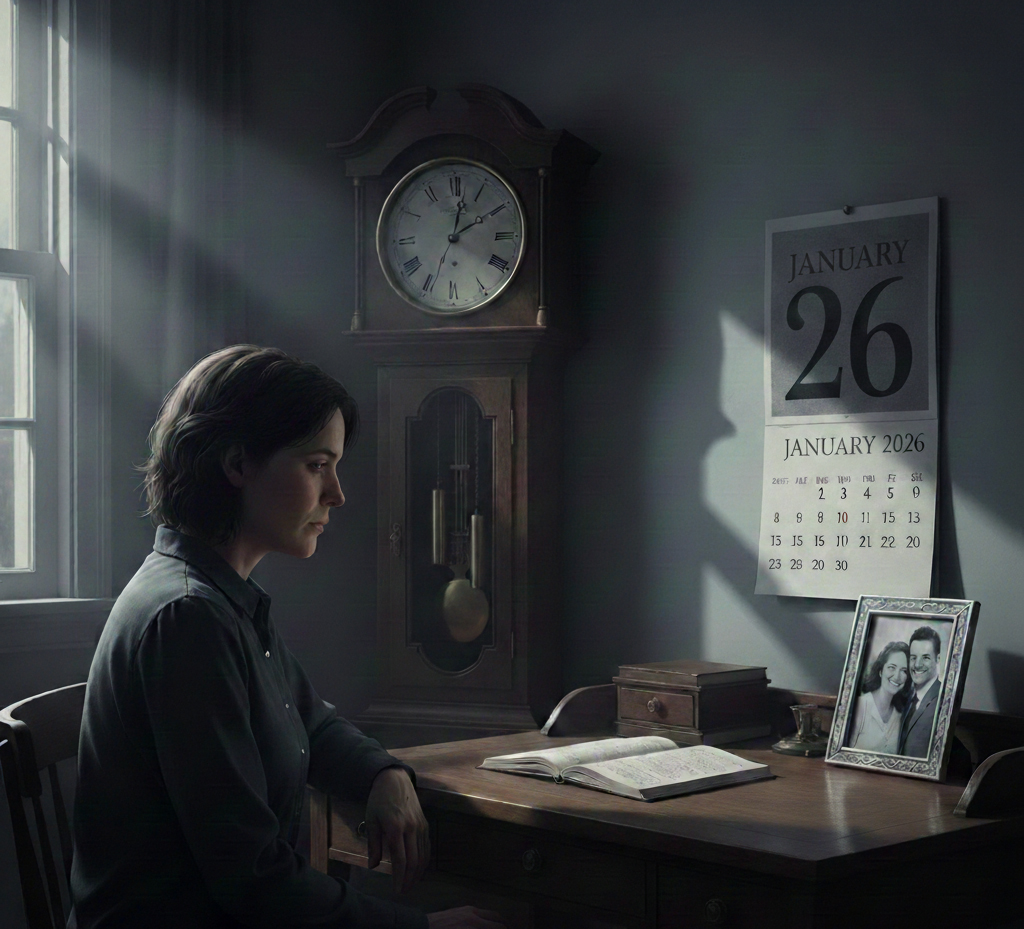
When the old year fades but the new one hasn’t truly begun
The beginning of the new year always brings a strange tension to our suicide loss support groups. While the rest of the world talks about fresh starts and new beginnings, many survivors sit in quiet dread. New Year’s resolutions feel meaningless when you’re still trying to understand how life continues without someone who was supposed to be part of your future. The calendar insists it’s a new year, but your heart is still living in the year you lost them.
After nearly fifteen years of facilitating support groups with my wife Teri, I’ve come to recognize what I call “the in-between time.” It’s that disorienting, suspended space that exists after suicide loss and before you begin to find your footing in an unwanted new reality. It’s one of the loneliest places grief can take you, and yet it’s a space almost every survivor inhabits at some point.
What is the in-between time after suicide loss?
The in-between time is the suspended state between the “before” (when the person you lost was alive) and the “after” (learning to live with the loss). It’s characterized by feeling frozen, unable to imagine a future, and measuring time in relation to the death. This phase has no set timeline and is a normal part of grief after suicide loss.
If you’re there right now, caught between the life you had and a future you can’t yet imagine, this post is for you.
What Is the In-Between Time After Suicide Loss?
The in-between time is that suspended state where the past feels more real than the present, and the future seems impossible to envision. You’re no longer living in the “before” time, that period when the person you lost was still alive, but you haven’t yet arrived at whatever “after” might look like.
In this space, time itself feels broken. Days blur together without meaning. The world moves forward while you remain frozen. Well-meaning people talk about “moving on” or “getting back to normal,” but those phrases sound like a foreign language. How can there be a “normal” when the person you cared for is gone? How can you move forward when every cell in your body wants to go backward?
This in-between time isn’t just about the early days or weeks after a suicide loss. Some survivors find themselves there for months or even years. Research suggests that three to five years is often when grief after a suicide loss begins to integrate, though everyone’s experience differs. There’s no set timeline for when it ends, and that uncertainty can feel overwhelming. You might wonder if you’ll ever feel grounded again, if the future will ever feel like something worth moving toward rather than something to dread.
When Time Stops After Losing Someone to Suicide
Right after a suicide loss, time can feel like it has stopped entirely. I remember those early days after losing our son John in April 2009. The clock kept ticking, the sun kept rising, but nothing felt linear anymore. I was caught in a loop, replaying moments, searching for signs I’d missed, trying to rewind to a point where I could change the outcome.
In the in-between time, there is no “new” to move toward, only the past to replay endlessly in your mind. You might find yourself:
- Unable to make plans beyond the next few hours or days
- Feeling disconnected from celebrations, holidays, or milestones
- Experiencing time as either rushing forward too fast or crawling unbearably slowly
- Measuring everything in relation to the death: “three weeks since,” “two months today,” “this time last year”
- Feeling like you’re watching life happen around you rather than participating in it
This suspended state is one of the most isolating experiences of grief. The world expects you to keep functioning, to eventually “bounce back,” but you’re not ready. You end up putting on a mask so people stop asking how you’re doing. You may not even know what moving forward means, or if you even want to find out.
The Weight of Unwanted Transformation After Suicide Loss
Here’s something that’s both painful and strangely freeing, the person you’re becoming is different from who you were before. And you didn’t choose this transformation.
We didn’t ask to become suicide loss survivors. We had no choice about what happened to the person we lost, about the moment that split our lives into before and after. That lack of choice is one of the most difficult aspects of suicide loss. Everything changed in an instant, and we had no say in the matter.
We do have some say in who we become as we carry this grief forward.
I want to be very clear about what I mean by this, because it’s easy to misread. I’m not talking about “choosing happiness” or “deciding to heal” as if grief were simply a matter of willpower. I’m not suggesting that you can think your way out of devastating loss or that you should pressure yourself to become someone you’re not ready to be.
What I mean is this, slowly, almost imperceptibly, you will face small moments where you have a choice. Whether to answer the phone when a friend calls or let it go to voicemail. Whether to attend a family gathering or stay home. Whether to try that new suicide loss support group or keep your pain private. Whether to be gentle with yourself today or push through with harsh self-criticism.
These tiny choices, made one at a time without any grand plan, begin to shape the path forward. And that path doesn’t require leaving the person who died behind.
Moving Through Grief, Not Moving On After Suicide Loss
One of the most damaging myths about grief is that healing means “moving on” from the person who died. In our support groups, I often see new survivors wrestling with this belief, feeling guilty for any moment of lightness or peace, as if experiencing anything other than constant sorrow means they didn’t love deeply enough.
The truth is far more nuanced. Moving through the in-between time doesn’t mean moving on. It doesn’t mean forgetting, replacing, or diminishing your love for the person who died. It means learning to carry them with you in a new way.
Continuing bonds research shows us that maintaining a connection with the person who died is not only normal but can be an essential part of healing. As grief researcher Dr. Alan Wolfelt explains, we don’t “get over” grief. We learn to reconcile ourselves to it. You don’t have to say goodbye to move forward. You learn to hold both grief and life, sorrow and small joys, loss and love.
One day you might think about the person you lost and smile at a memory instead of only crying. That doesn’t mean you’ve forgotten their death or the pain of their absence. It means you’re learning to remember the fullness of who they were, not just how they died.
Maybe you’ll make plans for next summer, even though part of you still can’t believe you’re here without them. That doesn’t mean you’ve abandoned them. It means you’re discovering that building a future doesn’t erase the past.
The Thousand Little Steps Forward After Suicide Loss
The path out of the in-between time doesn’t happen all at once. It’s not a decision you make on January 1st or any other arbitrary date. There’s no light-switch moment where everything suddenly becomes clear.
Instead, it unfolds through a thousand little choices and steps, most of them so small you barely notice them happening:
- The morning you realize you slept through the night without nightmares
- The afternoon you found yourself laughing at something genuinely funny
- The evening you cooked a real meal instead of just eating to survive
- The day you thought about the person you lost without immediately spiraling into “what if” and “if only”
- The moment you made plans for next month and didn’t feel overwhelmed by dread
- The conversation where you shared a memory of them without breaking down
These aren’t signs that you’re “over it.” They’re signs that you’re learning to live alongside your grief. You’re discovering that the weight of loss can shift without disappearing, that you can honor their memory while still engaging with life.
After almost seventeen years of living with John’s death, I can tell you that these small steps do add up. Not into forgetting, not into the life you had before, but into something new. A life that includes both the reality of loss and the possibility of meaning, connection, and even joy.
Holding Contradictory Truths in Suicide Bereavement
One of the most important lessons I’ve learned, both personally and through our support group work, is that contradictory truths can exist at the same time.
You will never forget the person you lost. Your old life, the one that existed before the suicide, is gone. Those losses are real and permanent, and it’s okay to grieve them deeply, perhaps for the rest of your life.
AND
There is a future ahead, even if you can’t see it clearly yet. There will be moments of peace, connection, and meaning. You can build a life that honors both their memory and your own need to continue living.
Both of these things are true. You don’t have to choose between them.
The death of the person we lost was a fork in the road none of us wanted to encounter. Standing at that fork, looking at the path you must now walk without them physically present, is heartbreaking. But over time, with support and compassion for yourself, you may find that you’re taking steps forward. Not because you’ve forgotten or stopped caring for them. Because you’re learning what it means to carry them with you.
Understanding Prolonged Grief After Suicide Loss
It’s important to recognize that suicide loss carries unique risks. While approximately 10 to 20 percent of bereaved individuals in the general population develop prolonged grief disorder (a recognized condition in which grief remains intensely debilitating over time), research shows that survivors of suicide loss are at significantly higher risk. Studies have found that up to 43 percent of close suicide loss survivors may experience prolonged grief symptoms.
This isn’t shared to frighten you, but to validate: if you’re struggling intensely, you’re not alone and you’re not failing at grief. The guilt, the anger, the unanswerable questions, the trauma responses — these are recognized aspects of suicide bereavement that many survivors face.
If your grief feels overwhelming and isn’t easing over time, or if you’re experiencing persistent depression, anxiety, or thoughts of suicide yourself, please reach out to a mental health professional. The AFSP Suicide Bereavement Clinician Directory lists therapists specially trained in suicide loss. The Columbia Center for Prolonged Grief also offers a self-assessment tool and a therapist finder. Treatment specifically designed for prolonged grief disorder can make a significant difference.
Give Yourself Time and Permission to Grieve
If you’re reading this and feeling pressure to embrace a new year before you’re ready, take your time, there is no deadline for moving out of the in-between time.
Some survivors find themselves there for months. Others for years. There is no right timeline. Your grief is shaped by your unique relationship with the person who died, your circumstances, your support system, and countless other factors that make your experience different from anyone else’s.
You don’t owe anyone a specific pace of healing. You don’t have to meet arbitrary milestones or force yourself to feel things you don’t feel. Comparing your grief to others’ often leads to unnecessary shame and self-judgment.
But if you’re ready, or even just curious about what might lie ahead, consider this: What small thing might you be willing to hope for in the year ahead?
Not happiness necessarily, not “closure” or “moving on,” but perhaps just:
- A moment of genuine peace
- A connection with someone who understands
- A day when the weight feels a little lighter
- The courage to try that support group you’ve been thinking about
- Permission to take care of yourself without guilt
- Space to honor both your grief and your continuing life
Starting to hope for small things doesn’t mean abandoning the person you lost. It means honoring the life they would have wanted for you, even as you carry the grief of their absence.
The Ripple Effect: You Are Not Alone
Each year, approximately 760,000 people die by suicide globally. Using the widely accepted research estimate, each suicide impacts approximately 135 people, meaning over 100 million people worldwide are exposed to suicide loss annually. You are part of a vast, often invisible community of survivors.
That number reminds us of two things at once. Suicide creates an enormous ripple effect of grief and trauma, touching far more lives than most people realize. And you are absolutely not alone in this experience, even though isolation is one of the most painful parts of suicide loss.
Whether the person who died was your spouse, parent, child, sibling, friend, colleague, or someone else significant in your life, your grief matters. Your loss is real. And there are others who understand the specific pain you’re carrying.
The Fork in the Road After Suicide Loss
The death of the person we lost creates a fork in the road we didn’t ask to face. We don’t get to go back to the path we were on before, no matter how desperately we wish we could. That reality is brutal and unfair.
But we do eventually have to choose which way to go from this unwanted fork. Do we remain frozen at the intersection, unable to move in any direction? Or do we, slowly and gently, begin to take steps forward, carrying their memory with us?
This isn’t about being strong or brave or resilient, though you are all of those things even when you don’t feel like it. It’s about recognizing that the in-between time, while necessary and valid, doesn’t have to be permanent. When you’re ready, you can begin to explore what life might look like beyond it.
Like Sunflowers Turning Toward Light
The name of this blog comes from something John gave us. He loved to garden, and he helped grow sunflowers in our family garden every year. He often said they were the happiest flower, that they were always smiling.
At his funeral, an empty vase was placed on the altar at the start of the service. One by one, his sister and each of his cousins walked up to place a sunflower in that vase, from the oldest cousin to the youngest, who needed a little help to reach. In the middle of that heartbreak, those sunflowers became a beacon of something. Not happiness exactly. Something quieter than that. The possibility that beauty could still exist in the same room as grief.
That’s what emerging from the in-between time can look like. Not a forced march toward happiness or a denial of your pain, but a gradual, almost imperceptible turning toward the possibility of life alongside grief.
Some days you might turn away from the light entirely, and that’s okay. Some days the clouds are too thick, the pain too overwhelming. But other days, you might notice yourself turning, almost without meaning to, toward small sources of warmth: a kind word from a friend, a memory that makes you smile, a moment of peace in nature, a connection with another survivor who simply gets it.
The in-between time won’t last forever, though it may feel endless right now. When you’re ready, and only when you’re ready, you may find yourself stepping, slowly and gently, into the new year ahead.
And on that walk, you won’t be alone. The person you lost travels with you, in your heart and memory. And there are others on similar paths, including communities like Alliance of Hope (an online support forum for suicide loss survivors) and the American Foundation for Suicide Prevention, who understand exactly where you are and will stand alongside you for as long as you need.
If you’re in crisis right now, please reach out. Call or text 988 for the Suicide & Crisis Lifeline, or use their confidential online chat. You don’t have to face this alone.
The future isn’t about replacing what you lost. It’s about learning to carry loss and life together, finding meaning in both the grief and the healing that becomes possible over time.
Key Takeaways
- The in-between time is a normal phase with no set timeline. Whether you’re in this suspended state for months or years, there’s no right timeline for moving through it. Your grief is uniquely yours.
- You don’t have to “move on” to move through grief. Healing doesn’t mean forgetting or leaving the person who died behind. It means learning to carry them with you in a new way while engaging with life again.
- Small choices accumulate into healing over time. Healing happens through a thousand tiny steps and decisions, most so small you barely notice them. Each gentle choice shapes your path forward.
- Grief and the capacity for life can coexist. You can hold both profound loss and moments of peace. You can honor their memory while building a future. Both truths can exist at the same time.
- Support is available and you don’t walk this path alone. Whether through support groups, therapy, online communities, or crisis resources, help is here. The person you lost remains with you in memory, and others who understand are ready to walk alongside you.
Other Posts You May Also Find Helpful
- Time After Loss: Finding Your Way Forward – Explores how time moves differently after suicide loss and how to find a new relationship with it as you carry your grief forward while rebuilding life.
- Physics = Love: Continuing Bonds After Suicide Loss – Explores how our connections with the person who died persist and transform rather than end, offering a framework for staying in relationship with them.
- Finding Your Way Through: Understanding the Journey of Healing After Suicide Loss – A detailed look at Dr. Jack Jordan’s seven tasks of healing and how they unfold over time.
- Roadblocks to Healing After a Suicide Loss – Reflective questions to help identify what might be quietly holding you back from moving through grief.
- What Does Healing Look Like? – A compassionate look at what healing actually feels like in practice, and why it rarely looks the way we expect.


Leave a Reply