
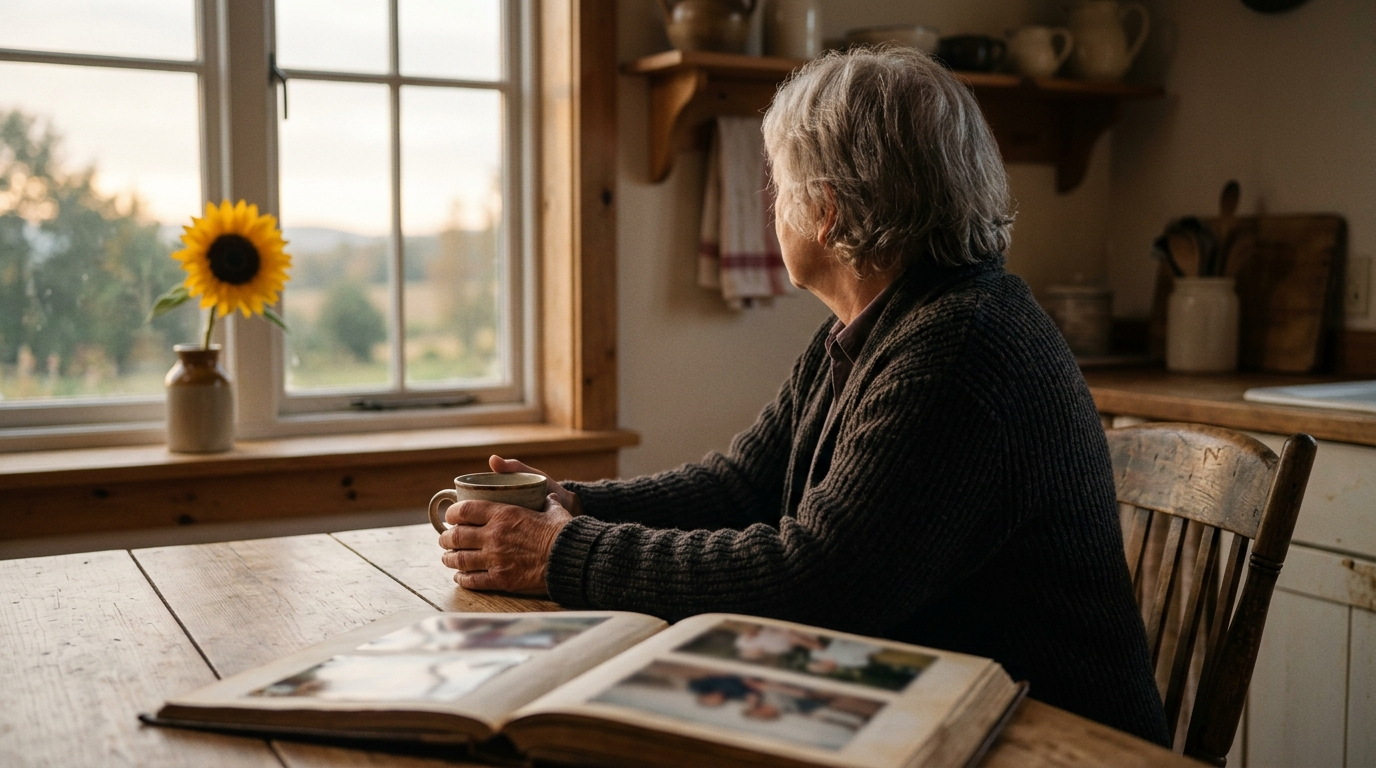

The house is quiet in a way it never was before. There is a chair at the table nobody sits in, and there is no other child’s bedroom down the hall with a light still on. When you lose an only child to suicide, the grief arrives with a second, quieter loss underneath it, the loss of the future you had planned for around your child.
In more than fifteen years of facilitating our suicide loss support group, SOSMADISON, I have sat with many parents in this position, and I have watched them carry two questions at once.
- Who am I now?
- Who is left?
Losing an only child to suicide means grieving your child and, at the same time, grieving the daily role of being a parent, the plans you made together, and the family that was supposed to carry on after you.
Teri and I lost our son John to suicide when he was seventeen, so as survivors we know the part of losing a child from the inside. We also know where our road differs from yours. We still have our daughter, and that changes the nature of our loss without making it smaller, it’s different. I don’t know your exact grief, because I am not walking in your shoes. What I can share is what I have heard from the parents who have lost their only child, and what has helped some of them find their footing. And their new future.
Quick answer:
Losing an only child to suicide ends more than one relationship. It can end your daily role as a parent, your expectation of family nearby as you age, and your picture of who comes after you. That grief is real and isolating, and many parents find peer support helps them rebuild a life that still includes their child.
If you are in crisis right now, please call or text 988 for the 988 Suicide and Crisis Lifeline. They are available around the clock, and grieving parents are welcome to reach out, including on the nights when the house is too quiet and the years ahead feel like too much.
Losing an Only Child to Suicide Changes Who Is Left in the Room
A lot of the writing about child loss assumes there is someone else in the family grieving beside you. A surviving son or daughter. A sibling who shared the same childhood. When your only child dies, the one person who would have stood next to you in this grief is the person who is gone. Our post on losing a child to suicide covers what parents in every kind of family carry, including guilt, the unanswerable why, and the strain on a marriage.
This post stays with what is specific to having no other child.
That part is easy to miss from the outside, and it can be easy to underestimate from the inside too, because it arrives in pieces. First came the funeral, the paperwork, and the shock that keeps you numb. Sadly, the other pieces show up later, when the visitors stop and your calendar clears. The Sunday phone call that never comes, because there is no one to make it. Your child is no longer around to ask how you are really doing.
An only child was never only one person in your life.
They were the reason the future had a direction.
Parents in this position often describe it as feeling like the family itself died along with their child. That feeling is a real reflection of how much changed.
Are You Still a Parent If Your Only Child Died?
Yes. A parent whose only child dies is still a parent, and no one gets to take that from you, including your own grief on its worst days.
What ends is the daily work of parenting. The phone calls, the worrying, the visits you planned, the small jobs that made you a Mom or a Dad in practice. Losing an only child to suicide ends that work, but it does not end the relationship. We still say the words “our son John”, and we always will. That is one of the ways his memory stays present, by talking about him in the present tense.
Not every parent had an easy relationship with their child at the end. If the two of you were estranged, in conflict, or living far apart, or if you were caring for an adult child with needs of their own, you grieve this loss too, and the grief may include things left unsaid or unfinished. None of that makes you less of a parent, and none of it makes your grief any smaller.
There is a difficult question that eventually shows up. Many parents in our group dread being asked whether they have children, at a party, on a medical form, in the chair at the hair salon, because every possible answer feels wrong. Saying no feels like a betrayal. Saying yes invites questions you may not have the strength to answer.
One small thing that helps is choosing a response ahead of time that you can say without your voice giving out, something as short as “Our daughter died, and I am still her dad.” You get to decide how much of the story goes with it. You don’t have to stand there like a deer in the headlights. You can control the discussion.
The days built around being a parent can be hard. Mother’s Day and Father’s Day both raise the question of whether you still count, and we wrote about each of those days with that question in mind. It also helps to understand that disenfranchised grief after suicide loss, grief the people around you do not fully recognize, is a large part of why a parent with no other children can feel so invisible.
You do not stop being a parent because your child is no longer here to be parented.
The Quiet Years Ahead and the Fear of Growing Old Alone
Loneliness is the word parents in this situation frequently use, and it comes in two layers. The first is missing your child. The second is looking down the calendar and seeing decades without a child next to you. The questions can be very practical, like who will sit in the waiting room when you are sick, or who you will call when the news is bad.
If the years ahead feel unbearable, please call or text 988 at any hour. Grieving parents sometimes have thoughts of not wanting to go on, and that is a reason to reach out to someone right away.
A 2025 qualitative study in OMEGA, Journal of Death and Dying heard from 24 older adults in the United States whose only child had died. The researchers described grief that stayed intense over time, additional losses piling up beside the first, and isolation from people who had not been through it. They also found that social support and faith mattered, and that the services and policies meant to help had real gaps. The study was limited to only-child loss in general, not suicide loss specifically, and 24 people is a small group. Even so, the authors called this population “understudied”. Hello, there are a lot of people out there who can tell you all about it, just ask.
If you are reading this in the quiet, the thought of all those years may feel like too much to carry. You do not have to solve them this week. To be honest, suicide grief is a long marathon, not a sprint, and the first job is only to get through the next day, then the next. If the years ahead ever begin to feel like something you cannot face at all, our post on when and how survivors can use 988 explains what actually happens when you call or text. You are not alone, there are people who care.
The isolation often deepens in the second year, when the casseroles stopped long ago and friends assume you are further along than you are. Your second year after suicide loss looks at why the support drops away right when many parents need it most.
One small habit that helps some parents is putting one standing activity on the calendar each week that involves another person, even a phone call. It is easier to keep a plan that already exists than to reach out on a night when you have nothing left.
Updating a Will and Beneficiary Forms After Your Child Dies
Unfortunately, a lot of paperwork asks the same question over and over. Who is the beneficiary? The will you wrote had your child in mind in nearly every line. So did the beneficiary forms, the retirement accounts, and the policies meant to make sure they would be taken care of. Now each form asks who comes next, and there is no easy answer. For some parents, filling out a beneficiary form feels like signing away the child they lost.
There may be time sensitive steps in your situation, and an estate attorney can tell you which ones. Beyond those, many parents find they need more time than they expected. Some choose a niece, a nephew, or a close friend. Some direct a gift toward a cause or a scholarship that carries their child’s memory. Some decide slowly, over a year or more, and that is a reasonable pace for a decision this emotionally exhausting. It helps to bring a trusted friend to the appointment with your advisors to take notes, so you do not have to hold everything alone.
If the urge to put everything in order ever comes from not wanting to be here, that is a reason to call or text 988 first, and the paperwork can wait.
I am a suicide loss survivor, not a lawyer or an accountant, so please treat this as a peer perspective and not legal or financial advice. An estate attorney or financial advisor can tell you what applies to your situation.
When the Family Line Ends and the Dreams Need Rethinking
Some parents feel this part of the loss of a child as one of the more painful realizations. The family surname ends with your child. The recipes, the holiday traditions, the stories about who you were before your child was born, the photographs and heirlooms, all of it was headed toward your child, and now it has no destination.
Then there are the dreams you never said out loud. The wedding. The grandchildren you would spoil. A retirement with your child close by, or at least a flight away. Grieving the future they never had is its own layer of loss, and for a parent with no other child it can feel like the entire future is gone rather than one part of it.
Some only-child parents do have grandchildren, and those grandchildren can be a real source of light. A grandchild is also a different relationship from the one you had with your own son or daughter, and it is fair to feel gratitude and the ache of that difference at the same time. Our grandchildren bring light into our lives, and I say that gladly. They can not and will not replace our son John.
A family line can end and a legacy can still carry on, though the two are not the same thing, and it is fair to grieve the difference.
Rethinking your hopes is slow work, and it does not mean replacing them. Some dreams may need to be set down before anything new can be picked up, and a few will never be replaced at all. Some parents eventually find smaller, more present hopes, like a friendship, a volunteer role, or a tradition kept in their child’s honor.
Your child’s interests, their humor, and the stories only you remember are still a legacy, and you are now its keeper. Physics = Love is an essay I wrote about continuing bonds, the idea that a relationship with the person who died does not have to end for you to heal.
What Still Having a Daughter Does and Does Not Change
To be quite honest, I hesitated to write this section. I don’t want it to sound like a comparison, because pain does not compare or rank. Having our daughter does not make up for losing our son John, and it does not spare us from missing him.
What it does change is real. There is still someone who shares our family history, someone who remembers John as a brother, someone to worry about and show up for. In the early months, knowing I needed to be there for my family mattered more than I can easily say. I recognize that some of you do not have that anchor, and I do not say this to add to your hurt. The reasons people keep going can come from many places, including a partner, a close friend, faith, work, and keeping your child’s memory alive. You do not need a child at home to matter.
What it does not change is the nature of the loss itself. Parenting a surviving child while grieving brings its own strain, including the fear of losing them too and the guilt of not being enough for them, which our post on feeling like you failed as a parent takes on directly. Having another child is also not automatically a comfort. Some parents have surviving children who grieve very differently, live far away, or are estranged, and those parents can feel alone inside a family that looks full. John carried my first and last name, something his sister does not. Something her children will not.
Pain does not rank.
Every parent reading this lost a child.
And that matters to each of them.
So the honest contrast is this. A surviving child changes who is in the room and what the future looks like, but the person who is missing is missing either way.
Finding Support After Losing an Only Child to Suicide
You may not be ready for a support group, and there is no pressure. When you are, it helps to know where parents like you gather. The Compassionate Friends offers peer support for bereaved parents, including a page written for parents after a child’s suicide and another for those who lost an adult child. AFSP’s support group finder lists support groups by location, and Alliance of Hope’s community forum is an online option for the nights when leaving the house is too much.
In a room where most parents have other children, it can help to tell the facilitator at the start that your child was your only child. They can look for others in the same position, or simply understand why some of the conversation may land differently for you.
If you are grieving alongside a spouse or partner, the two of you are now each other’s entire family circle, and that adds its own pressure. Marriage after losing a child to suicide looks at what strains a relationship and what has helped. And if you are grieving on your own, with no partner and no other family close by, the online spaces listed above matter even more.
The house may stay quiet for a long time. The chair at the table may feel empty, and no post can hand back what was taken. Losing an only child to suicide changes the shape of your whole life, and it is fair to grieve every part of that change, including the parts nobody else can see.
What I can tell you, after seventeen-plus years of sitting in support group meetings, is that parents who have lost a child and parents who have lost an only-child can find people who understand. They also find ways to stay their child’s parent out loud, by saying the name, telling their stories, marking their birthday, and keeping a place at the table when it feels right. You will carry your child’s memory and spirit into whatever comes next, and you do not have to carry it alone.
If you are not ready to reach out, that is alright, and the door stays open. Whenever you have the strength, there are a lot of parents who have lost a child out here. Until then, say your child’s name today, to someone who will listen.
Posts You May Also Like
- Your Child’s Birthday After Suicide Loss: We Remember – A personal look at a child’s birthday after the loss, including why “his Nth birthday” can matter more than “would have been.”
- Finding a Grief Counselor After Suicide Loss: A Practical Guide – How to find a clinician trained in suicide bereavement, which can help with the identity questions this post raises.
- Finding Your People: The Healing Power of Suicide Loss Support Groups – What a good meeting looks like and how to choose one, for parents wondering whether a group could hold room for them.
- Helpers After Suicide Loss: Who They Are and How to Work With Them – Why expected supporters sometimes disappear, and how to ask for what you need from the people who stay.
- 5,000 Days vs. 6,244 Days: Long Term Healing After a Suicide Loss – A parent’s view of long-term healing, for anyone counting the days and wondering where it leads.
PRINTABLE GUIDE PDF
A two-page PDF guide has been generated for survivors to print, save, or share.

Leave a Reply