
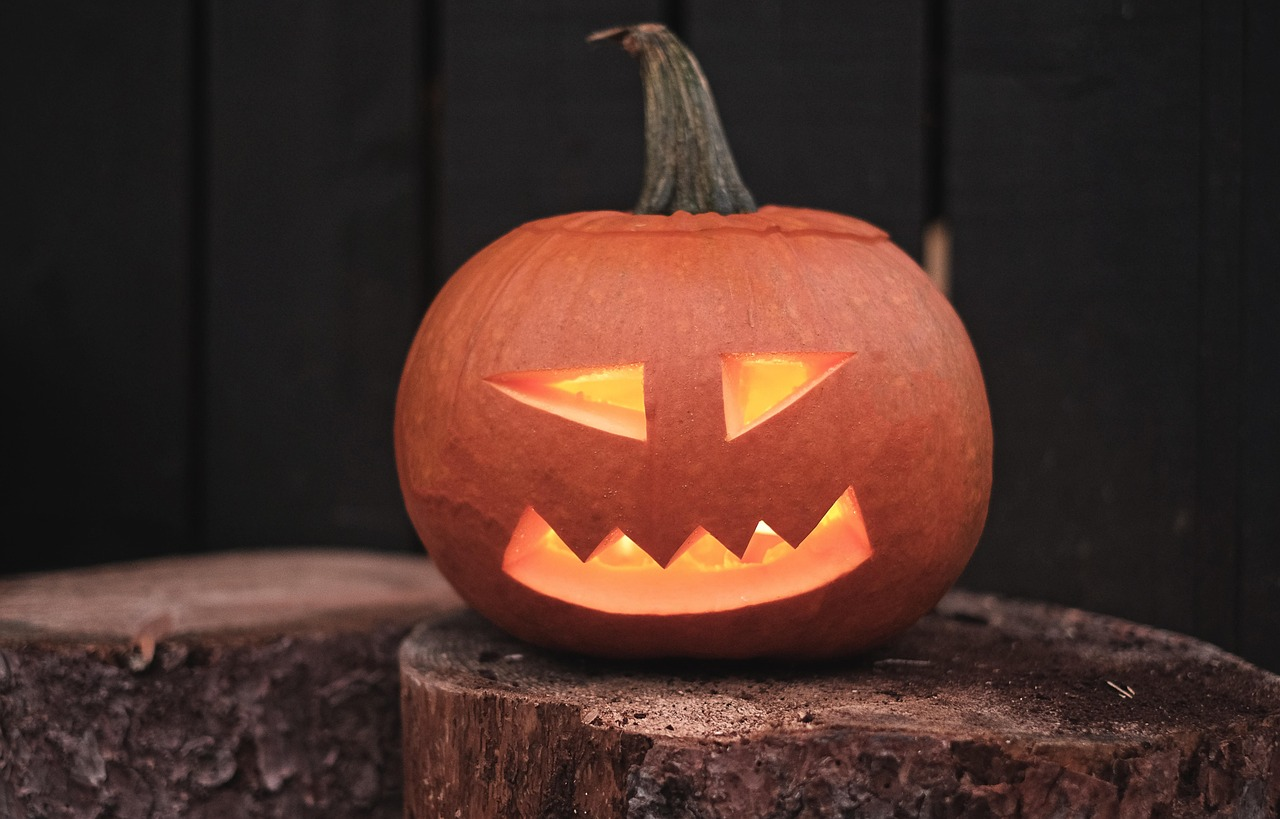

The porch light goes on before the sun even starts to set. Every October for as long as our son John was alive, our house was the starting point, his friends gathering on our house first before they fanned out to cover the neighborhood. We carved elaborate pumpkins every year, the kind that took an entire Saturday afternoon to make. When the trick-or-treaters started arriving, somewhere between one hundred and two hundred kids would come up our walkway before the night was over.
Halloween after suicide loss is not just about candy and costumes. It is a holiday built almost entirely around death imagery, skeletons, gravestones, mock graveyards, arriving at your door dressed up as entertainment while you are carrying a loss that is anything but entertaining. As a suicide loss survivor and a support group facilitator for more than fifteen years now, I have sat with a lot of people in our support group meetings who dread Halloween.
Let me be clear. We still do Halloween. We still get our one hundred to two hundred kids most years. But we do gentle decorations now, not the graphic ones, because some things about grief change even when the love does not.
Quick answer:
Halloween is hard after a suicide loss because the holiday leans on death imagery, skeletons, gravestones, and mock violence as entertainment, which can activate real grief and trauma responses. There is no obligation to participate the way you used to. Skipping, delegating, leaving town, or scaling back your own decorations are all valid ways to get through the night.
If Halloween is bringing up thoughts of suicide, please call or text 988 for the 988 Suicide and Crisis Lifeline.
Survivors of suicide loss carry an elevated risk themselves, and there is no shame in reaching out. They are there for you, day or night.
In This Post
- Halloween After Suicide Loss: Why It Hits Different
- The Mask We All Wear
- The Neighborhood Does Not Know What You Are Carrying
- If Halloween Was Your Person’s Holiday Too
- Giving Yourself Permission
- Helping a Grieving Child Through Trick-or-Treating
- Protecting Your Heart in the Days Before Halloween
- Common Questions About Halloween After Suicide Loss
Halloween After Suicide Loss: Why It Hits Different
Skeletons in yards. Gravestones on lawns. Cotton cobwebs and fog machines turning an ordinary front yard into a graveyard for the night. For most people, that is just Saturday in October. For a suicide loss survivor, it can be something else entirely.
Most other holidays, you can find a way around if you need to. Skip the dinner. Decline the invitation. Let the phone go to voicemail. Halloween does not work that way. It comes straight to your front door and rings the doorbell, again and again, for hours, whether you are ready for it or not.
Grief researchers, including bereavement specialist Dr. Therese Rando, describe what happens when something ordinary suddenly reopens the wound as a sudden temporary upsurge of grief, sometimes shortened to STUG. It is grief arriving without warning, activated by something specific, then receding once the moment passes. Halloween is practically built to produce STUG reactions in suicide loss survivors, not once but over and over across a single afternoon and evening. The holiday’s entire visual language, death played for laughs, is the same imagery that now lives permanently inside your own grief story.
Halloween turns the thing you are grieving into a punchline on every lawn on the block.
This is not oversensitivity. It is not you failing to have a sense of humor about a fun holiday. Grief ambushes like this one do not ask permission before they arrive, and a decorated front yard is exactly the kind of ordinary place they hide in. Someone in our group once described having to turn around halfway down the block rather than walk past a neighbor’s elaborate graveyard display, unable to make themself keep going. That reaction makes complete sense once you understand what it is actually responding to.
Sadly, most of your neighbors have no idea any of this is happening behind your front door. They bought a talking skeleton because it was funny in the store. That gap, between what the holiday means to them and what it means to you, is where a lot of the pain lives. It is the same gap that shows up every autumn as the seasonal turn into fall starts pulling at old grief long before a single pumpkin appears on a porch.
The Mask We All Wear
Halloween is the one night of the year when everyone else puts on a mask on purpose. There is something almost unbearably ironic about that if you are a suicide loss survivor, because you have probably been wearing one all year.
Rev. Fr. Charles Rubey who writes for Alliance of Hope has described this exact overlap, the costumes and face paint of Halloween as an unintentional mirror for the mask survivors wear every day, smiling at work, nodding through small talk, answering “I’m fine” to a question that deserved an honest answer. To be quite honest, that mask gets heavier every year you carry it alone.
Part of why the mask feels so necessary is guilt. Research comparing suicide loss to other kinds of death found that roughly 55 percent of suicide loss survivors report significant self-blame, compared to about 18 percent of people grieving a death from another cause.
Let’s put that in perspective. That is three times as many suicide loss survivors walking around convinced, on some level, that they should have stopped it. Should have known. Should have said something different the last time they spoke. It is exhausting to carry that weight and also perform normalcy for a doorbell full of eight-year-olds in costumes.
It is ok to not be ok on Halloween. It is not ok to keep pretending the mask is your actual face.
There is a strange justice in it, actually. Halloween lets everyone pretend for one night, which means for one night, wearing a mask does not make you the odd one out. Use that. Let the holiday’s own logic work in your favor instead of against it.
For one night, wearing a mask does not make you the odd one out.
You do not owe anyone a performance of being fine, not your neighbors, not the parents dropping off their kids at the end of your driveway, not even your own extended family. Taking the mask off does not mean falling apart in front of strangers. It can be as simple as one honest sentence when someone asks how you are doing. “Tonight is hard for me, but I’m glad you’re here” is a complete answer. You do not have to explain suicide loss to a stranger who is buying candy corn in the supermarket to be honest with them.
The Neighborhood Does Not Know What You Are Carrying
Beyond the decorations themselves, there is the noise of the night. Kids shrieking with laughter. Music from a neighbor’s speaker. Groups of costumed teenagers moving in loud, happy packs down the sidewalk. None of it is aimed at you, and all of it can still feel like a wall between you and everyone else on the block.
What’s Your Grief points out something worth sitting with, that Halloween carries a particular sting for anyone whose person died young, since it is one more holiday full of costumes and traditions that person will never get to have again. If our son John were still here, he would be thirty-five this year, and I still catch myself doing that math every October, picturing a version of Halloween that never got to happen. Unfortunately, due to his death by suicide in 2009, he is forever seventeen, forever young.
The jarring contrast between the world’s carefree energy and the weight you are carrying is not a sign that something is wrong with you. It is one of the more disorienting parts of grief during any holiday season, and Halloween’s particular brand of loud joy makes it sharper than most. Many survivors describe feeling almost angry at how easily everyone else seems to be enjoying themselves. If that is you now, that anger is not a character flaw. It is grief looking for somewhere to go.
The world keeps decorating for a party you were never invited back to.
Rev. Fr. Charles Rubey also wrote in Alliance of Hope, about when he was present at a family’s home the same week their daughter died, recalled watching the neighbors across the street assemble a graveyard display without any idea what had just happened next door. He was not angry at them. He simply saw, clearly, how little the world adjusts itself around any one family’s grief. That gap is not cruelty. It is just how tragedy and ordinary life sit side by side, whether either one is ready for the other.
If Halloween Was Your Person’s Holiday Too
Halloween was one of our son John’s favorite holidays. His friends used our house as their home base every year, gathering on our porch before they headed out to cover the rest of the community, and my wife Teri and I always had those elaborate carved pumpkins waiting for them when they arrived. That memory is one of the reasons Halloween still matters to us, even now.
If Halloween carried real meaning in your relationship with the person you lost, this time of year can feel particularly hollow without them. Maybe you carved pumpkins together. Maybe you handed out candy side by side every year without missing one. Maybe your person was the one who always went overboard on the decorations, and now the empty spot where those decorations used to go feels like its own kind of grief.
John is not defined by suicide. That is, sadly, just how he died. John loved gardening sunflowers with us, he loved a good scary movie, and he loved handing out candy to a stream of kids who thought our house was the best stop of the night. Halloween is still allowed to be his holiday.
You do not have to choose between honoring what your person loved and protecting yourself from what the holiday has become.
That might mean keeping a tradition exactly the way it always was. It might mean changing it, the way we eventually moved from the more graphic decorations John and his friends loved toward gentler ones that still let us keep the porch light on and the door open. Either choice honors the same thing. There is no single correct way to carry a person’s memory through a holiday that used to belong to both of you.
Giving Yourself Permission
You have permission to handle Halloween however actually works for you this year. There is no required way to survive it, and choosing your own emotional well-being over a night of trick-or-treaters is not selfish. It is necessary.
- If answering the door feels like more than you can manage, ask a trusted friend or family member to take it over for the evening. They can hand out candy while you retreat to a quieter part of the house.
- You can leave home entirely if that feels better. A movie theater, a friend’s house in a different neighborhood, or a quiet dinner out can all offer a few hours of real distance from the sights and sounds of the night.
- Some survivors find real comfort spending Halloween evening in the company of people who understand exactly what this night costs. Over fifteen years of facilitation, I have watched people take a seat around the room at SOS Madison on all kinds of hard nights, not just the anniversary and the big holidays everyone expects to be difficult. Support group meetings exist for nights like this one too. If you are looking for that kind of in-person peer support, American Foundation for Suicide Prevention keeps a searchable directory of both online and in-person support.
- Others prefer quiet solitude, a favorite film that has nothing to do with Halloween, or an early night with the lights off and the phone on silent.
One small, practical thing helps more than people expect. Decide your plan before October 31st arrives, not in the middle of it. Making the choice in advance, while you still have a clear head, spares you from having to think it through while the doorbell is already ringing.
Whatever you choose, remember that experiencing difficulty around Halloween does not mean you are failing at grief or sliding backward. Grief is not linear, and this particular night will always carry extra weight for a lot of us. That is not a setback. It is just Saturday in October, for a suicide loss survivor.
Helping a Grieving Child Through Trick-or-Treating
If you are managing Halloween while also holding a child’s or grandchild’s hand through their own grief, you are carrying two things at once, your loss and theirs, and the holiday does not pause for either one.
Children notice more than adults sometimes give them credit for. A grieving child walking past a mock graveyard, or watching a friend’s older sibling dress up as a ghost, may connect it to their own loss in ways that catch you completely off guard. What’s Your Grief notes that this is especially true for children who lost someone young themselves, since every Halloween ahead is also one more holiday that person will not get to share with them.
You do not need a perfect script. A short, honest sentence usually does more good than a long explanation. Something like, “Some of the Halloween decorations can feel a little heavy for our family this year, and that’s ok,” gives a child permission to feel what they feel without turning the whole night into a lesson about grief. If your child wants to skip the scarier houses on the block, let them lead on that. If they want to talk about the person you lost while they are out trick-or-treating, follow them there too.
This is also where talking honestly with the rest of your family about what does and does not work for your household this year can matter most, especially with grandparents or extended family who may not realize a decoration choice or an offhand comment landed harder than they meant it to. You are allowed to ask a grandparent to skip the graphic yard display this year.
If you notice a child struggling in a way that feels bigger than one hard night, that is worth a conversation with their pediatrician or school counselor, not something to carry alone as a parent or grandparent already managing your own grief. Their are grief counselors who specialize in childhood grief. There are also great guides about how to assist children and teens deal with suicide grief.
Protecting Your Heart in the Days Before Halloween
Self-care in the days leading up to Halloween matters as much as how you spend the night itself. If you know a certain street or a certain neighbor’s yard is going to be hard to look at, plan an alternate route now, while you still can.
It is ok to gently ask a close neighbor whether they might tone down a particularly graphic display this year. Most people, once they understand, are more sensitive than you would expect. You cannot control everyone’s choices, and that is not your responsibility.
A kind, honest ask costs you very little and sometimes changes everything.
Limit your exposure to Halloween-themed media and social media if it is adding to the weight rather than lightening it. Scrolling through everyone else’s costume photos and decorated porches on a night that already feels heavy rarely helps.
Reach out to your support network before the day arrives, whether that is friends, family, a therapist, or fellow survivors who already understand, and be specific about what kind of support would actually help. Self-care after suicide loss does not have to be elaborate. Sometimes it is as small as having your exit planned before you walk in the door.
If a well-meaning neighbor or acquaintance says something clumsy about the holiday, you do not owe them an education in real time. A short, kind redirect is enough, and it is fine to have a few scripted responses ready ahead of time so you are not composing one on the spot while your heart rate is already up.
Common Questions About Halloween After Suicide Loss
- Is it normal to dread Halloween after a suicide loss? Yes. Many survivors describe dreading October before a single pumpkin shows up on a porch. Halloween leans heavily on death imagery played for laughs, and that combination can stir up real grief for anyone carrying a suicide loss. Dreading it does not mean you are handling your grief wrong.
- Why do Halloween decorations feel worse than other holiday reminders? Most holidays remind survivors of an absence. Halloween goes further, it turns death itself into a joke on every lawn on the block. That specific combination, mockery layered onto the exact thing you are grieving, is part of why this holiday can feel sharper than others.
- Do I have to hand out candy if Halloween feels like too much this year? No. You can ask a trusted friend or family member to take over the door, leave home for the evening, or skip the holiday entirely. None of those choices make you a bad neighbor or a bad parent. Protecting your own well-being is allowed.
- How do I help a grieving child get through trick-or-treating? Keep it simple and honest. A short sentence acknowledging that some of the decorations feel heavy this year, paired with letting your child choose which houses or streets to skip, usually goes further than a long explanation. Follow their lead on how much they want to talk about it.
- Will Halloween always feel this hard? Not necessarily, though there is no fixed timeline. For some survivors, the sharpest edges soften with time. For others, certain Halloweens stay harder than others depending on what else is happening in life that year. Both are normal, and neither means you are grieving incorrectly.
- What do I say if someone asks why I seem off during a holiday that is supposed to be fun? You do not owe anyone a full explanation. “Tonight is hard for me, but I’m glad to see you” is a complete, honest answer. You get to decide how much of your grief you share and with whom, even on a night when everyone else is being loud about theirs.
The Porch Light Still Goes On
We still turn the porch light on before the sun sets. We still carve pumpkins, and most years, we still get somewhere between one hundred and two hundred kids coming up our walkway before the night is over. What has changed is the decorations, gentle now instead of graphic, and the fact that my wife Teri and I know, every single time that doorbell rings, exactly what it costs some of the parents standing on our steps to be out there smiling at all.
Halloween after suicide loss does not have to look the way it used to. It does not have to disappear from your life either. You get to decide, every single year if you need to, what this holiday means now. Some years that will look like an elaborate pumpkin and a full bowl of candy. Some years it will look like a dark house and an early night. Both are honest. Both are allowed.
Sadly, the world will keep decorating for death every October whether we are ready for it or not. But the love does not go anywhere. Our porch light still comes on. So can yours, however dim you need it to be this year.
Posts You May Also Like
- Grief Ambushes After Suicide Loss: When Grief Catches You Off Guard – Halloween’s decorations and sounds are classic ambush territory; this post explains why grief can activate so intensely and what to do when it catches you by surprise.
- Navigating Thanksgiving After Suicide Loss: When Gratitude Feels Impossible – Once Halloween passes, Thanksgiving arrives fast, and this comprehensive guide is waiting with honest help for the next holiday on the calendar.
- Finding Your People: The Healing Power of Suicide Loss Support Groups – If spending Halloween evening with people who understand sounds like the right call, this post explains what survivor support groups offer and how to find one.
- Understanding Anger and Conflicted Emotions in Suicide Loss – The irritation and disconnection Halloween can stir up is not unusual; this post helps make sense of the complicated emotional terrain of suicide loss grief.
- Finding Your Way Through the Holidays: A Guide for Survivors of Suicide Loss – A broader look at surviving the entire holiday season, from Halloween through the new year, with practical strategies for protecting your emotional well-being.
PRINTABLE GUIDE PDF
A two-page PDF guide has been generated for survivors to print, save, or share.

Leave a Reply